Reduce L1 sanctions workload by 30–50% without changing your systems in sanctions screening and transactions monitoring
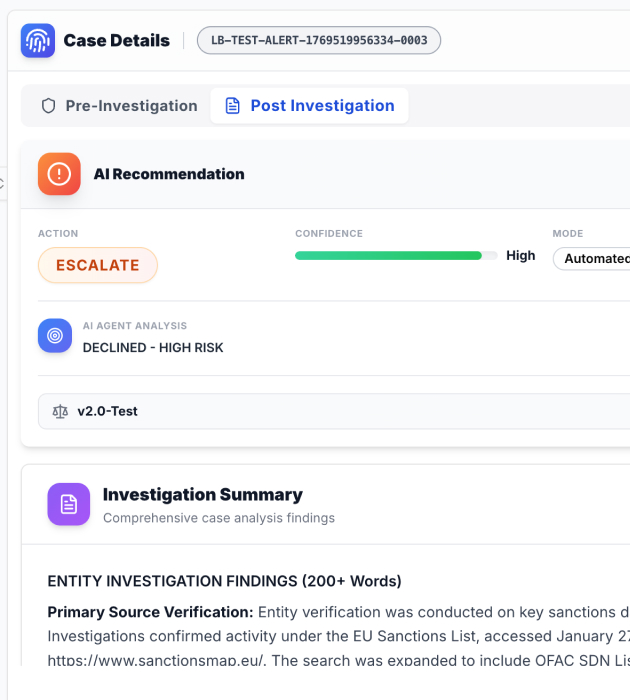
We add a layer of intelligence for sanctions L1 triage that standardises how alerts are evaluated, reduces manual effort, and ensures every decision is backed by clear reasoning. Analysts remain in control.
Sanctions triage is under pressure
Alert triage is under pressure
More entities, transactions, and watchlists are triggering alerts. Most still need manual review.
False positives are still high
A large share of alerts are not real risks, but they take the same effort to clear.
Decisions are not consistent
Outcomes vary across analysts based on workload and interpretation.
Regulators expect more
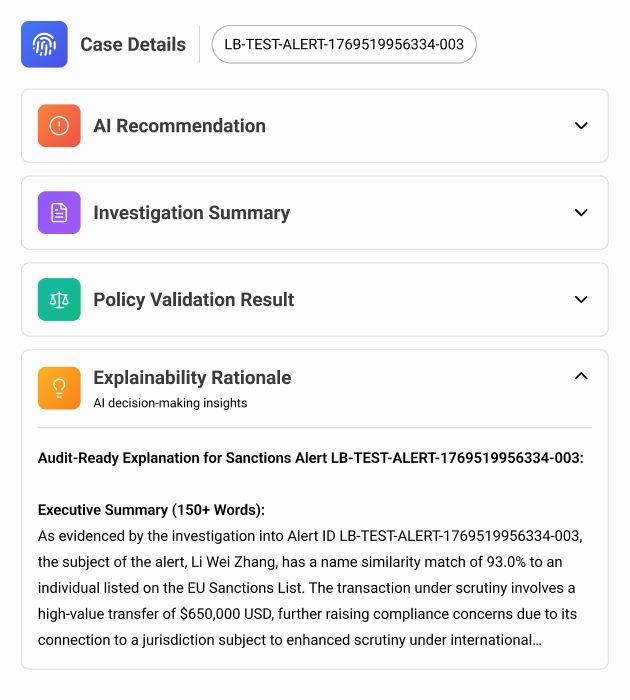
It is no longer enough to show what decision was made. The expectation now is to clearly demonstrate why the decision was made.
Cost and risk are increasing
More alerts mean more effort. Inconsistent decisions increase audit exposure.
A simple way to bring consistency into sanctions L1 decisions
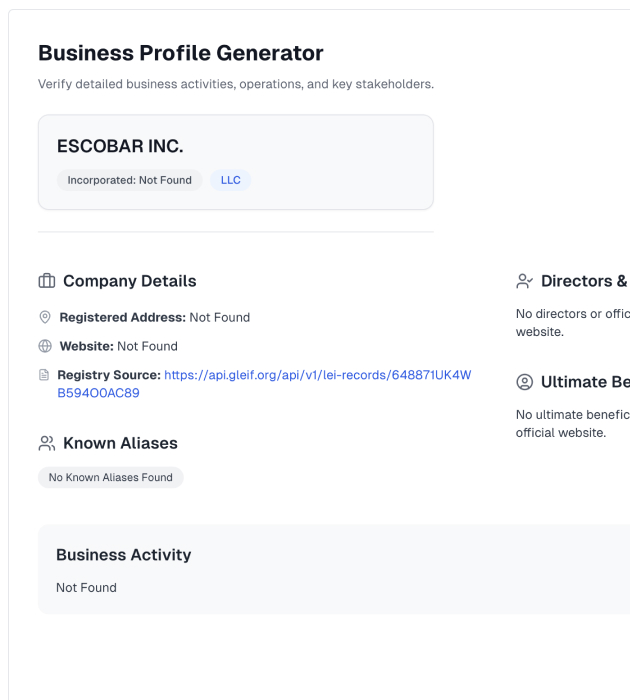
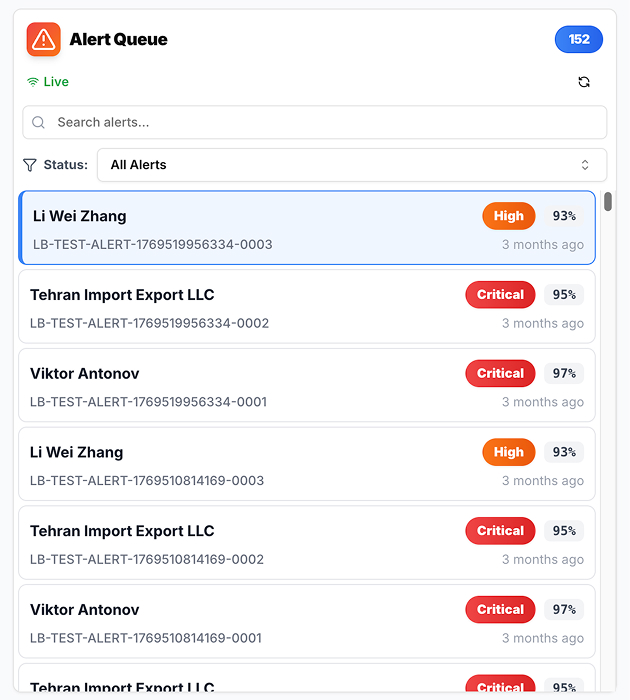
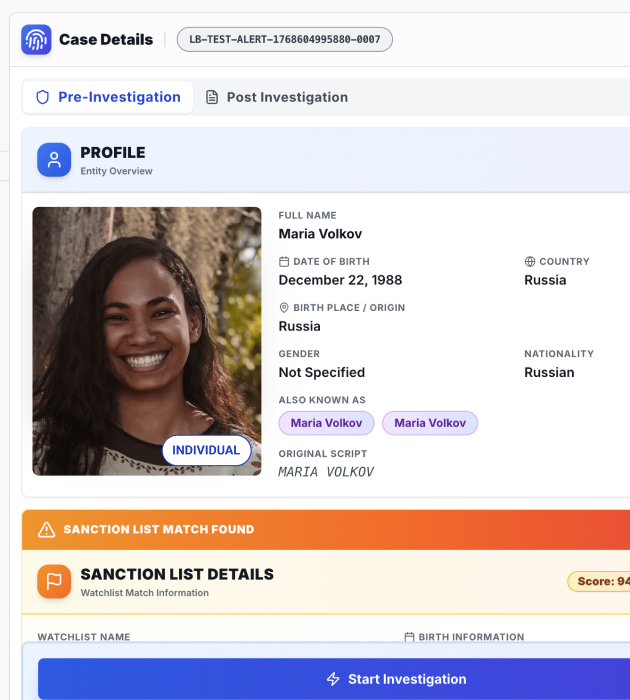
Different approaches solve different parts of the problem
Vendors
Focus on detection. Stop at alert generation.
Internal processes
Rely on analyst judgement. Hard to scale. Hard to audit.
LatentBridge
Adds a decisioning layer on top of your existing systems.
Built for how sanctions teams actually work
What changes in practice
30–50%
reduction in time spent on false positives
More consistent
decisions across analysts and teams
Every decision
backed by clear evidence
Stronger
audit readiness
Lower cost per alert
without scaling teams linearly
How consistent are your L1 decisions today?
If the same alert goes to two analysts, do you get the same outcome?
See how this can work in your environment.